How Generative AI is Revolutionizing Customer Service Automation
Imagine if your customer service team could handle 300% more inquiries while simultaneously improving customer satisfaction scores. This isn't a futuristic fantasy—it's happening right now as businesses worldwide harness the power of generative AI to transform their customer service operations.

The customer service landscape is experiencing its most significant transformation since the advent of the internet. While traditional chatbots could only handle simple, scripted interactions, generative AI is breaking down these barriers, creating intelligent systems that can understand context, express empathy, and solve complex problems with human-like sophistication.
The Current State of Customer Service Automation
The statistics paint a clear picture of an industry in rapid transition. According to Gartner's 2024 Customer Service Technology Survey, organizations using advanced AI automation report handling 67% more customer interactions without increasing staff levels. Meanwhile, McKinsey's latest research reveals that businesses implementing generative AI in customer service see average cost reductions of 25-40% within the first year.
However, the transformation goes beyond mere cost savings. Today's AI-powered customer service systems are addressing fundamental challenges that have plagued the industry for decades:
Response time bottlenecks that leave customers waiting hours for simple answers are becoming obsolete. Modern AI systems provide instant responses 24/7, with IBM's Watson reporting average response times of under 2 seconds for complex queries.
Inconsistent service quality across different agents and time zones is being standardized. AI ensures every customer receives the same high-quality experience, regardless of when they reach out or which channel they use.
Scalability limitations during peak periods are disappearing. Unlike human agents who can handle one conversation at a time, AI systems can manage thousands of simultaneous interactions without degradation in service quality.
The shift is particularly evident in how businesses are reimagining their customer service strategies. Forrester's 2024 Customer Experience Index shows that 78% of enterprises now view AI automation not as a cost-cutting measure, but as a competitive advantage that enhances customer relationships.
The Technology Revolution Behind Modern AI Customer Service
Generative AI represents a quantum leap from rule-based chatbots. While traditional systems relied on predetermined decision trees and keyword matching, Large Language Models (LLMs) like GPT-4 and Claude can understand context, nuance, and even emotional undertones in customer communications.
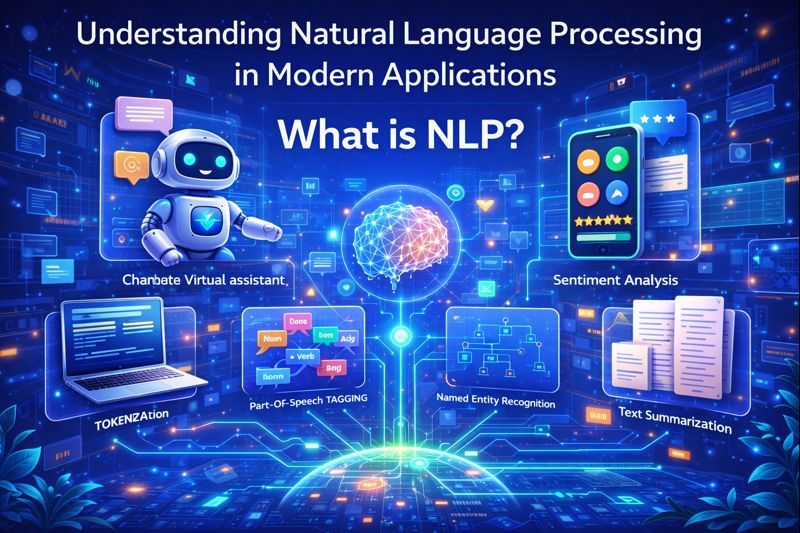
Natural Language Processing (NLP) advancements have reached unprecedented sophistication. Modern AI systems can:
- Interpret complex, multi-part questions that would previously require human intervention
- Understand colloquialisms, typos, and varied communication styles across different demographics
- Maintain context across extended conversations, remembering previous interactions and customer history
- Generate responses that match your brand voice and communication standards
Conversational AI platforms are now incorporating advanced features that were unimaginable just two years ago. Sentiment analysis allows systems to detect customer frustration and automatically escalate to human agents when appropriate. Multi-modal capabilities enable AI to process not just text, but images, documents, and even voice inputs.
The integration capabilities of modern AI systems are equally impressive. API-first architectures allow seamless connection with existing CRM systems, knowledge bases, and business applications. This means AI agents can access real-time customer data, order histories, and product information to provide personalized, accurate responses.
Machine learning algorithms continuously improve performance by analyzing successful interactions. Unlike static systems, these AI platforms become more effective over time, learning from every customer conversation to refine their responses and problem-solving capabilities.
Real-World Impact and Measurable Benefits
The practical applications of generative AI in customer service are delivering remarkable results across industries. Shopify's implementation of advanced AI customer support has reduced average resolution time by 40% while improving customer satisfaction scores from 3.2 to 4.6 out of 5.
Financial services companies are seeing particularly strong returns. Bank of America's Erica, their AI-powered virtual assistant, now handles over 1 billion customer requests annually, with 95% accuracy rates for routine transactions and inquiries. This has allowed human agents to focus on complex financial planning and relationship building.
E-commerce platforms report even more dramatic improvements. Zalando's AI customer service system processes 85% of customer inquiries without human intervention, while maintaining customer satisfaction rates above 90%. The system handles everything from order tracking to complex return policies across multiple languages and regions.
The cost benefits extend beyond labor savings:
- Reduced training costs: AI agents don't require extensive onboarding or ongoing training programs
- Lower infrastructure expenses: Cloud-based AI solutions eliminate the need for large call center facilities
- Decreased error rates: AI systems maintain consistent accuracy, reducing costly mistakes and rework
- Improved first-contact resolution: Studies show 73% improvement in resolving issues on the first interaction
Healthcare organizations are leveraging AI for appointment scheduling, prescription inquiries, and basic medical guidance. Mayo Clinic's AI assistant handles over 500,000 patient interactions monthly, freeing up clinical staff for direct patient care while ensuring patients receive immediate responses to routine questions.
The productivity gains are equally impressive. Accenture's research indicates that customer service representatives working alongside AI systems are 38% more productive than those using traditional tools, handling more complex cases while AI manages routine inquiries.
Strategic Implementation for Maximum ROI
Successful AI customer service implementation requires strategic planning and phased deployment. The most effective approaches begin with a comprehensive audit of existing customer service processes to identify high-impact automation opportunities.
Start with high-volume, low-complexity interactions. These typically include:
- Order status inquiries
- Password resets and account access issues
- Basic product information requests
- Appointment scheduling and cancellations
- Simple troubleshooting procedures
Integration strategy is crucial for success. The most effective implementations connect AI systems with existing business tools:
- CRM integration ensures AI agents access complete customer histories
- Knowledge base connectivity provides AI with up-to-date product and policy information
- Ticketing system integration creates seamless handoffs between AI and human agents
- Analytics platforms track performance and identify improvement opportunities
Change management cannot be overlooked. Successful organizations invest heavily in preparing their human teams for AI collaboration. Rather than replacing agents, leading companies are upskilling staff to handle complex cases while AI manages routine inquiries.
Testing and optimization should be continuous processes. A/B testing different AI responses and conversation flows helps identify the most effective approaches. Companies report 15-25% improvement in customer satisfaction when they regularly optimize their AI interactions based on performance data.
Compliance considerations are particularly important in regulated industries. AI systems must be configured to handle sensitive information appropriately and maintain audit trails for regulatory requirements. Financial services and healthcare organizations typically require additional security protocols and data handling procedures.
The most successful implementations also include robust escalation protocols. AI systems should seamlessly transfer complex cases to human agents with complete context and conversation history, ensuring customers don't need to repeat information.
The Future of AI-Powered Customer Service
The trajectory of AI customer service automation points toward even more sophisticated capabilities. Predictive customer service is emerging as the next frontier, where AI systems anticipate customer needs before issues arise.
Gartner predicts that by 2026, 75% of customer service interactions will be handled by AI, with human agents focusing exclusively on complex problem-solving, relationship building, and strategic customer success initiatives.
Emerging technologies are expanding AI capabilities further:
Voice AI integration is reaching human-like quality, with systems like ElevenLabs and Murf creating natural-sounding voice interactions that customers can't distinguish from human agents.
Computer vision capabilities are enabling AI to process visual information, helping with product identification, damage assessment, and visual troubleshooting guides.
Emotional AI is developing the ability to recognize and respond appropriately to customer emotional states, adjusting communication style and escalation protocols based on sentiment analysis.
Multilingual AI is breaking down language barriers, with systems providing native-quality support in dozens of languages without requiring separate training or human translators.
However, challenges remain. Data privacy concerns are intensifying as AI systems process more personal information. Regulatory compliance is becoming more complex as governments develop AI-specific legislation. Integration complexity increases as businesses seek to connect AI with legacy systems and diverse technology stacks.
The most significant limitation may be customer acceptance. While younger demographics embrace AI interactions, studies show 40% of customers over 50 still prefer human agents for complex issues. Successful implementations must balance AI efficiency with customer preferences.
Transforming Customer Service with Strategic AI Implementation
The evidence is overwhelming: generative AI is not just improving customer service—it's fundamentally transforming how businesses connect with their customers. Organizations that embrace this technology strategically are seeing dramatic improvements in efficiency, cost management, and customer satisfaction.
The key to success lies in thoughtful implementation that enhances rather than replaces human capabilities. The most effective AI customer service systems create seamless experiences where customers receive instant, accurate responses to routine inquiries while complex issues are handled by empowered human agents with complete context.
As businesses navigate this transformation, choosing the right AI platform becomes crucial. ReadyChatAI offers comprehensive solutions designed specifically for businesses ready to harness the full potential of generative AI in customer service. Our platform combines advanced language models with intuitive integration capabilities, enabling organizations to deploy sophisticated AI customer service systems without extensive technical expertise.
Ready to transform your customer service operations? Discover how ReadyChatAI can help you implement cutting-edge AI automation that delights customers while driving operational efficiency. Schedule a personalized consultation to explore how our platform can be tailored to your specific business needs and customer service goals.