What is NLP?
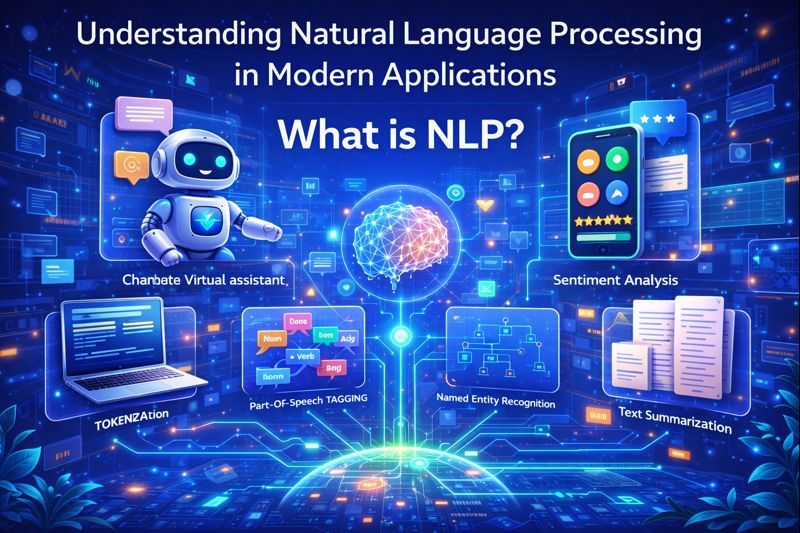
Natural Language Processing is a branch of AI that focuses on the interaction between computers and human language. It enables machines to read, understand, and derive meaning from human languages.
Key NLP Applications
Chatbots and Virtual Assistants
Modern chatbots use NLP to understand user queries and provide relevant responses. This technology powers customer service bots, virtual assistants like Siri and Alexa, and automated support systems.
Sentiment Analysis
Businesses use sentiment analysis to understand customer opinions from reviews, social media posts, and feedback. This helps in making data-driven decisions about products and services.
Machine Translation
Services like Google Translate use NLP to convert text from one language to another while preserving meaning and context.
Text Summarization
NLP algorithms can condense long documents into concise summaries, saving time for readers who need quick insights.
How NLP Works
The NLP pipeline typically includes:
- Tokenization: Breaking text into words or sentences
- Part-of-speech tagging: Identifying nouns, verbs, adjectives
- Named entity recognition: Finding people, places, organizations
- Parsing: Understanding grammatical structure
- Semantic analysis: Deriving meaning from the text
The Future of NLP
With advances in transformer models and large language models, NLP continues to improve rapidly. We can expect more natural and accurate language understanding in the years to come.
Conclusion
NLP is a fascinating field that bridges the gap between human communication and machine understanding. As the technology matures, we'll see even more innovative applications emerge.